
The Office Cleaning Checklist We Use on Every Indianapolis Site
Every complaint we hear from businesses switching vendors traces back to the same root cause: there was never a written scope, so tasks quietly disappeared. This is the baseline checklist behind our office cleaning accounts — use it to audit what your current vendor is actually doing.

Every visit
- Empty all trash and recycling; replace liners; take waste to designated pickup
- Clean and disinfect restrooms: fixtures, counters, mirrors, partitions, floors
- Restock restroom paper, soap, and hand towels
- Clean and disinfect breakroom counters, tables, sinks, and appliance exteriors
- Wipe high-touch points: door handles, light switches, elevator buttons, rails
- Vacuum carpeted traffic lanes and entry mats; dust-mop hard floors
- Spot-clean entrance glass and lobby surfaces
- Check and report burnt-out lights, leaks, or damage (we flag these in writing)


Weekly
- Full vacuum — under desks, edges, and corners, not just traffic lanes
- Damp-mop all hard floors with neutral cleaner
- Dust workstations, ledges, sills, and reachable horizontal surfaces
- Clean interior glass: conference rooms, partitions, sidelights
- Disinfect phones, shared keyboards, and conference room tables
Monthly / quarterly
- High dusting: vents, returns, ceiling corners, tops of cabinets
- Vacuum upholstered furniture; edge-vacuum baseboards
- Clean hard floors per floor type
- Detail baseboards, door frames, and kick plates
- Deep-clean refrigerator interior (scheduled with your office manager)
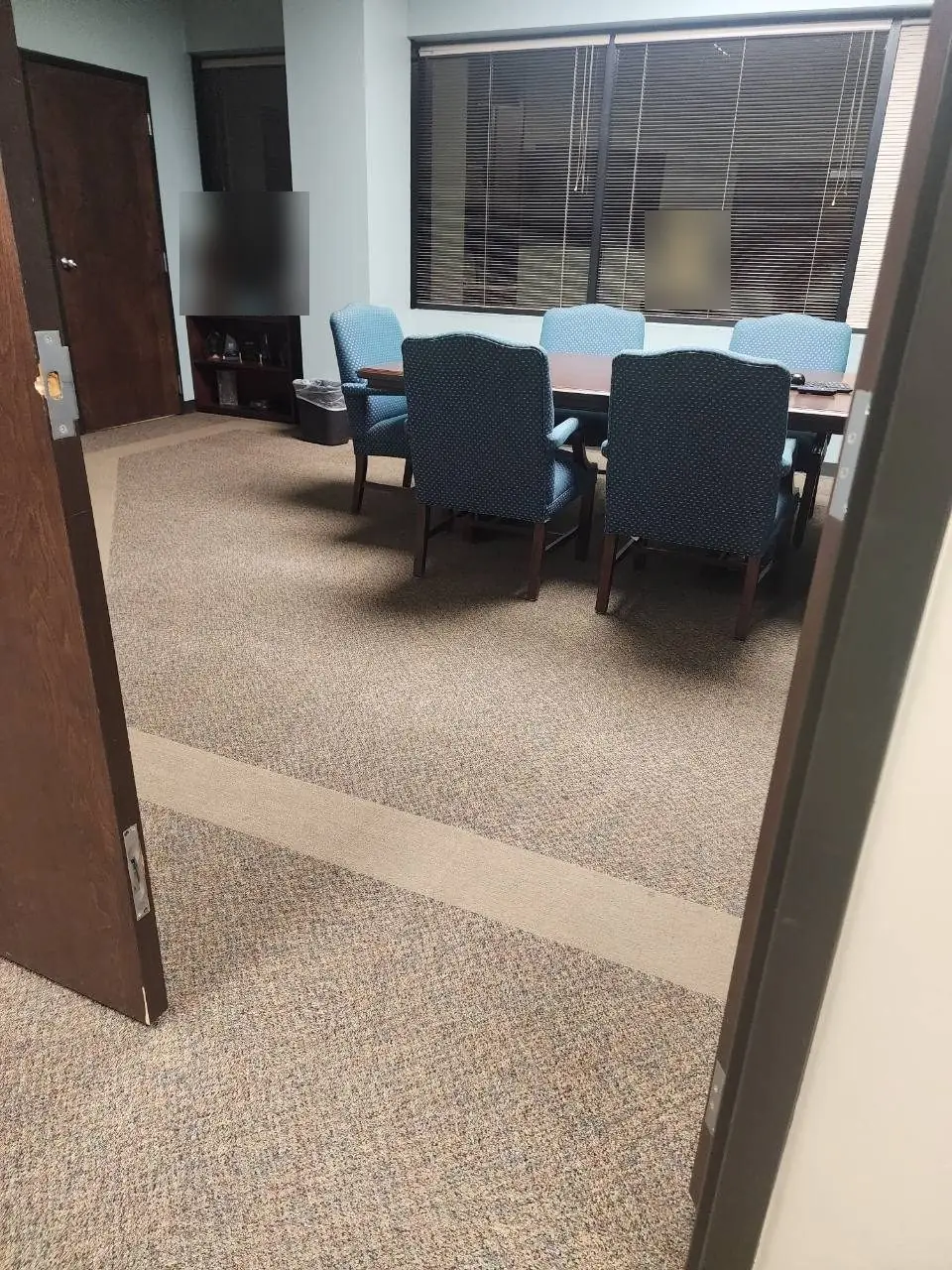
The part most vendors skip: verification
This checklist is what the vendor does. For what you check afterward, use our 20-minute inspection checklist for facility managers.
A checklist only matters if someone confirms it happened. On our accounts a supervisor verifies completion and signs off on every visit, and every completed visit is photographed and documented in a weekly or monthly service report with photo evidence organized by area, a completion timestamp, and a logged check-in. If your current vendor can't show you who checked the work, nobody did.
How to turn this checklist into a written scope
A checklist only helps if it matches your building. Before you send it to any cleaning company, walk your office with it in hand and mark three things next to each task: the areas it applies to, how often it needs to happen, and who notices when it is missed. A breakroom used by forty people needs a different frequency than a breakroom used by six. A reception area that clients see every morning deserves more attention than a storage hallway.
Then group the tasks by area rather than by frequency. Cleaners work room by room, and so do the people who complain. "Restrooms: nightly restock and disinfect touch points, weekly detail partitions and vents" is easier to verify than a long list where restroom tasks are scattered across three sections. That area-based list becomes the scope your vendor signs, and later the structure of your service report.
Adjusting the checklist by office type
Small professional suites
Law, accounting and insurance offices with one restroom pair and a small kitchen often do well with service two or three nights a week. The trade-off is trash and kitchen sinks on off nights. If your team eats in the office, add a quick midweek kitchen reset rather than a full extra visit.
Multi-tenant floors and shared corridors
When you share restrooms, elevators or a lobby with other tenants, the building usually cleans the common areas and you clean your suite. Write down where your scope stops. Many complaints in Indianapolis multi-tenant buildings come from tasks that fall between the landlord's contractor and the tenant's contractor.
Offices inside warehouses and flex buildings
Front offices attached to a warehouse pick up dust and grit from the floor side. Entry mats, the hallway between the office and the floor, and the breakroom shared with shift workers need more frequent attention than the private offices. Our warehouse cleaning page explains how we split one scope into two schedules.
Medical and dental suites
Clinical spaces need their own list with defined products and contact times. Use our medical office cleaning checklist or dental office checklist instead of this one.
Seasonal items Indianapolis offices forget
- Winter entries. Salt and slush come in from November through March. Plan more frequent entry mat and lobby attention in those months, and confirm who handles the mats themselves.
- Spring high dusting. Vents, light fixtures and the tops of cabinets collect dust over the heating season. Schedule a detail pass when the furnace goes off.
- Summer kitchens. Fruit flies show up fast when trash and recycling sit over a weekend. Make sure Friday service includes kitchen trash and drain checks.
- Year-end events. Holiday parties and client events add a cleanup the regular scope does not cover. Tell your vendor the date ahead of time.
What to do when the checklist is not being followed
First, check whether the task was actually in the written scope. If it was, document it with a photo and the date, and send it to your account contact rather than leaving a note for the night crew. A good company will schedule the correction, confirm when it is done and adjust the checklist so it does not repeat. At Chow Connections, missed items show up on the next service report with the fix noted. If the same item keeps coming back, it is a supervision problem, and it is worth reading our guide on signs it is time to replace your cleaning company.
For a complete picture of how we build office programs, see our commercial cleaning services in Indianapolis and our office cleaning page.
Frequently asked questions
How often should an office be cleaned?
Most offices with daily staff need restrooms, trash and kitchens handled every workday or most workdays, with dusting and detail work weekly and high dusting monthly or quarterly. Small suites with light traffic can often use two or three visits a week.
Should the cleaning checklist be part of the contract?
Yes. A checklist by area, with a frequency for each task, should be attached to the agreement. It is the only way to tell later whether something was missed or was never included.
Who cleans shared restrooms in a multi-tenant building?
Usually the landlord's contractor handles common areas and each tenant handles its own suite. Confirm it in writing with your property manager before you finalize your scope.
How do I know the checklist was followed?
Ask for proof by area. We log a digital check-in for every visit and send photos by area in a weekly or monthly report.
Related guides and services
- Commercial cleaning inspection checklist
- What a commercial cleaning service report should include
- How much commercial cleaning costs in Indianapolis
- Office cleaning in Indianapolis
- Day porter service
Want this checklist built for your building?
We build a site-specific scope from a free walkthrough — every task, area, and frequency in writing.
Request a Free Walkthrough or call (463) 710-8700